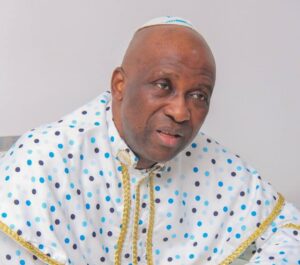

Akure Flyover: Yemie Fash Challenges Critics to Offer Alternatives as Traffic Pressure Mounts

Youth advocate and media entrepreneur, Oluyemi Fasipe, popularly known as Yemie Fash, has urged stakeholders opposing the proposed Akure Flyover to look beyond criticism and present workable alternatives to the traffic challenges confronting the Ondo State capital.
Fasipe said the growing population, increased vehicular movement and expanding commercial activities in Akure had placed unprecedented pressure on major roads, particularly the Oyemekun–Oba Adesida corridor.
Reacting to concerns over the flyover project recently flagged off by the Ondo State Government, he argued that the debate should focus not only on the cost of construction but also on the economic implications of allowing traffic congestion to worsen.
According to him, persistent gridlock around Adegbola, Ojaoba, Oba Adesida and the Alagbaka axis affects motorists, businesses, students, workers and emergency services.
“Every hour spent in traffic costs money. Fuel is wasted, vehicles develop faults faster, goods are delayed and productive time is lost. All these things have economic consequences,” he said.
Fasipe described the proposed 2.38-kilometre, 94-span structure, stretching from Adegbola Junction through Ojaoba and Oba Adesida to the St. Mathias/NNPC axis, as an attempt to address a major transportation bottleneck.
He acknowledged that critics had the right to question the project, but challenged them to provide a credible alternative capable of addressing the same problem.
“The opposition has every right to criticise the proposed Akure Flyover. That is part of democracy. But beyond criticism, it is also fair to ask: what is the alternative?” he asked.
Fasipe further noted that expanding the existing road could require the demolition of homes and businesses along the corridor, potentially causing significant displacement.
He therefore described the flyover as a possible long-term approach to improving traffic flow while reducing the extent of property displacement associated with extensive road expansion.
However, he stressed that supporting the project should not prevent residents from demanding accountability from government.
He called for transparency, strict adherence to approved specifications, quality construction and proper monitoring to ensure that public funds deliver value.
Fasipe also rejected the impression that the flyover represented the entirety of the Aiyedatiwa administration’s infrastructure programme, noting that road construction and rehabilitation projects were ongoing in Akure and other parts of Ondo State.
He urged residents to assess the government’s infrastructure efforts comprehensively while maintaining constructive scrutiny of individual projects.
“Development costs money, no doubt. But we should also ask ourselves: what will be the cost of doing nothing?” Fasipe said.
“Akure is growing, and its infrastructure must grow with it.”