

NAFDAC Alerts Nigerians as a fake version of a popular condom floods the market
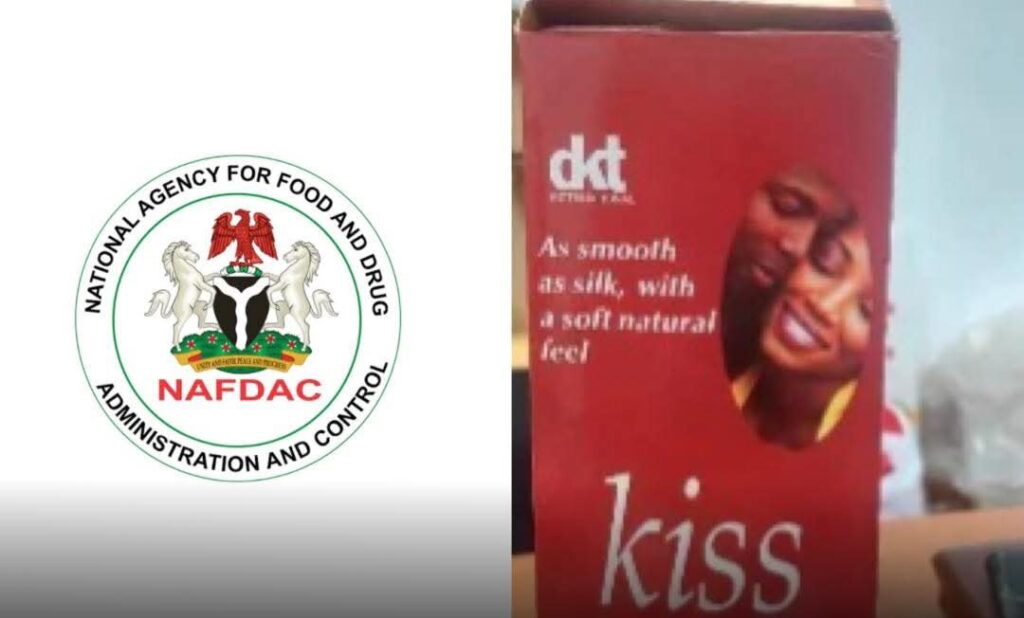
The National Agency for Food and Drug Administration and Control (NAFDAC) has warned Nigerians against the sale and use of counterfeit Kiss condoms in markets across the country, citing serious public health risks.
In a public alert issued on Monday (Public Alert No. 042/2025), the agency said the warning followed information from DKT International Nigeria, the Marketing Authorisation Holder for K+ss c+ndoms.
NAFDAC disclosed that f+ke products have been detected in Onitsha, Idumota and Trade Fair markets, as well as in markets in Kano, Abuja, Uyo, Gombe, Enugu and other locations.
NAFDAC explained that K+ss c+ndoms are male latex c+ndoms designed to prevent unwanted pregnancy and s+x¥ally transmitted infections, including HIV, gonorrhoea and syphilis. The agency warned that counterfeit versions undermine this protection and pose health dangers.
To help consumers identify genuine products, NAFDAC said original K+ss c+ndom boxes contain clear instructions, storage and caution information, complete manufacturer details and lighter-coloured packaging with a visible c+ndom image.
f+ke versions, it said, lack side information, have darker packaging, plain white inner boxes without c+ndom images, incorrect or incomplete manufacturer addresses and no storage or caution details.
The agency added that genuine c+ndom packs are light red with the brand name written closely across six lines, while counterfeit packs are darker, loosely written across five lines and have longer strips. Genuine c+ndoms are also larger, oval-shaped, well-lubricated and have bigger teat ends, unlike the thinner and less-lubricated f+ke versions.
NAFDAC warned that f+ke c+ndoms may break easily and could lead to infections, allergic reactions, ineffective protection and a false sense of security.
It said zonal directors and state coordinators have been directed to intensify surveillance and remove the f+ke products from markets nationwide.
The agency urged the public and healthcare professionals to report suspected counterfeit or substandard medical products to the nearest NAFDAC office.