
PAPSS Calls For Collaboration Among African Countries To Strengthen African-Owned Payment Infrastructure

The inaugural PAPSS COWRY Lagos 2025 conference opened on Tuesday, 2 December, at the Lagos Continental Hotel with a clear message to Africa’s financial ecosystem: the continent is ready to define its own payment future.
Hosted by the Pan-African Payment and Settlement System (PAPSS) in collaboration with Afreximbank, the African Union, and the AfCFTA Secretariat, the event convened central bankers, commercial banks, fintech founders, regulators, and technology operators to discuss Africa’s most ambitious payment modernisation programme to date.
PAPSS as the Backbone of a Borderless African Market
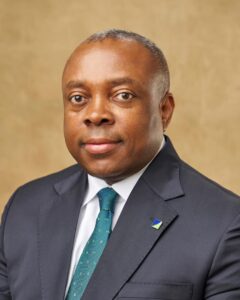
In his keynote address, PAPSS CEO Mike Ogbalu III traced the historical roots of Africa’s fragmented payment landscape. He highlighted how the continent’s 41 currencies, a legacy of political and economic disintegration since the 1884 Berlin Conference, still impede seamless intra-African trade.
“Africa’s 41 currencies do not speak to one another” he noted, describing the daily frictions faced by cross-border traders.

Ogbalu positioned PAPSS as the long-anticipated solution—an idea first imagined by pan-African leaders in 1963. Today, that vision has materialised.
Since launching publicly in January 2022, PAPSS has expanded to 19 countries, 160 commercial banks, and 15 national switches, enabling cross-border payments in local currencies with settlement times of under 120 seconds. The system embeds real-time AML checks, sanctions screening, and fraud controls.
He emphasised the platform’s value for banks, switches, fintechs, and SMEs: banks benefit from processing fees that are a fraction of current alternatives, while fintechs can build once and scale across the continent through a single connection.
Afreximbank: Powering Africa’s Digital Trade Rails
Afreximbank’s Executive Vice President, Global Trade Bank, Heytham El Maayargi, described PAPSS COWRY as more than a conference—“a movement” to build Africa’s own digital trade rails.
He underscored the continent’s annual loss of nearly $5billion to third-currency routing and the persistent liquidity and settlement constraints that hamper SMEs.
El Maayargi detailed Afreximbank’s pivotal role, backed by a $45 billion balance sheet and partnerships with more than 300 African banks, including a $3 billion settlement and liquidity facility supporting PAPSS.
He also unveiled upcoming innovations:
The PAPSS Card, enabling travellers to spend in their home currency across Africa without FX spreads or foreign routing. The Afreximbank Innovation Lab in Abuja, designed to incubate AI-driven and trade-tech products built on PAPSS infrastructure.
A Call for African-Owned Payment Infrastructure
Guest of Honour Prof. Pius Olanrewaju, President and Chairman of Council of the Chartered Institute of Bankers of Nigeria, stressed the urgency of owning Africa’s payment rails. With 80% of intra-African transactions settled through non-African currencies, he argued that monetary stability and integration remain out of reach.
He described PAPSS as the operational engine of the AfCFTA, reducing costs, delays, and reliance on external intermediaries.
AfCFTA Secretary-General Wamkele Mene echoed this sentiment, asking a pointed question: “What concerns the dollar with two African countries trading with each other?”**
Partnerships and the Road Ahead
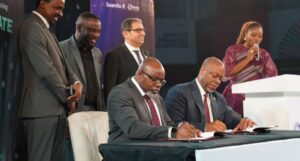
The conference climaxed with the signing of key partnerships for the PAPSS Card with Pay Altitude, Unify Payment, and Seanfix.
PAPSS also announced the launch of the PAPSS COWRY Awards, set for 2026, to honour outstanding payment companies and ecosystem contributors across Africa.
For a continent long underserved by global payment networks, PAPSS is more than infrastructure—it is a declaration of intent. Africa is not merely participating in the future of payments; ‘it is shaping it’.